
Ageing cum annealing furnaces play an important role in aluminium conductor manufacturing by providing controlled heating, uniform temperature distribution and precise ageing conditions. These furnaces help improve the mechanical and electrical properties of aluminium conductors while maintaining consistent production quality.
In this guide, we explain how ageing and annealing processes work, their benefits, key furnace features and why proper temperature control is critical for aluminium conductor manufacturers.
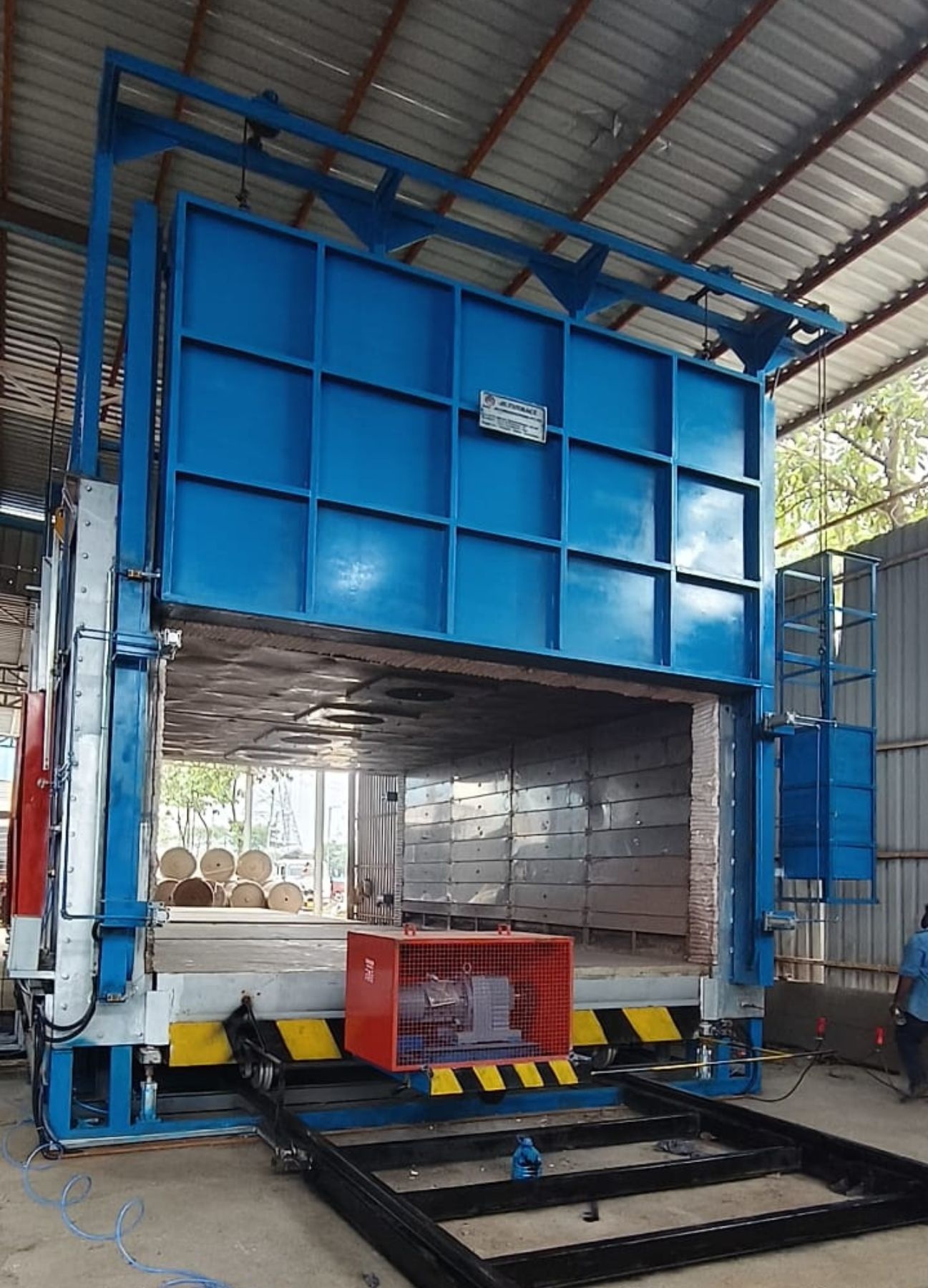
Aluminium conductors used in overhead power transmission — including ACSR, AAC, ACAR, ACSS, ACCC, and Al-59 conductors — go through demanding thermal processes before they’re fit to carry current across hundreds of kilometres. Two of the most critical of these processes are annealing and ageing. Getting them right determines whether a conductor performs reliably for decades or fails prematurely under load and environmental stress.
This is where an Ageing Cum Annealing Furnace earns its place as one of the most valuable assets on a cable and conductor manufacturing floor. By combining both processes into a single, fully automated system, manufacturers gain consistency, energy efficiency, and production flexibility that standalone equipment simply can’t match.
Why Annealing and Ageing Matter for Aluminium Conductors
Annealing softens aluminium alloy conductors, relieving internal stresses introduced during wire drawing and stranding. This restores ductility and conductivity, both essential for conductors that must flex, stretch, and carry electrical load without cracking.
Ageing, on the other hand, is a precision heat treatment applied to AAAC (All Aluminium Alloy Conductor) and aluminium alloy wire. It develops the mechanical strength and conductivity balance the alloy needs by allowing controlled precipitation within the metal’s microstructure. Since ageing and annealing operate in overlapping temperature ranges and both demand tight thermal uniformity, combining them into one bogie hearth furnace is a natural and efficient design choice.
For cable and conductor manufacturers, choosing the right aluminium annealing furnace is essential for consistent heat treatment and product quality. An advanced ageing cum annealing furnace provides precise temperature control and efficient processing, making it a reliable solution for aluminium conductor heat treatment, AAAC conductor ageing, and aluminium wire applications.
Batch Processing Built for Scale
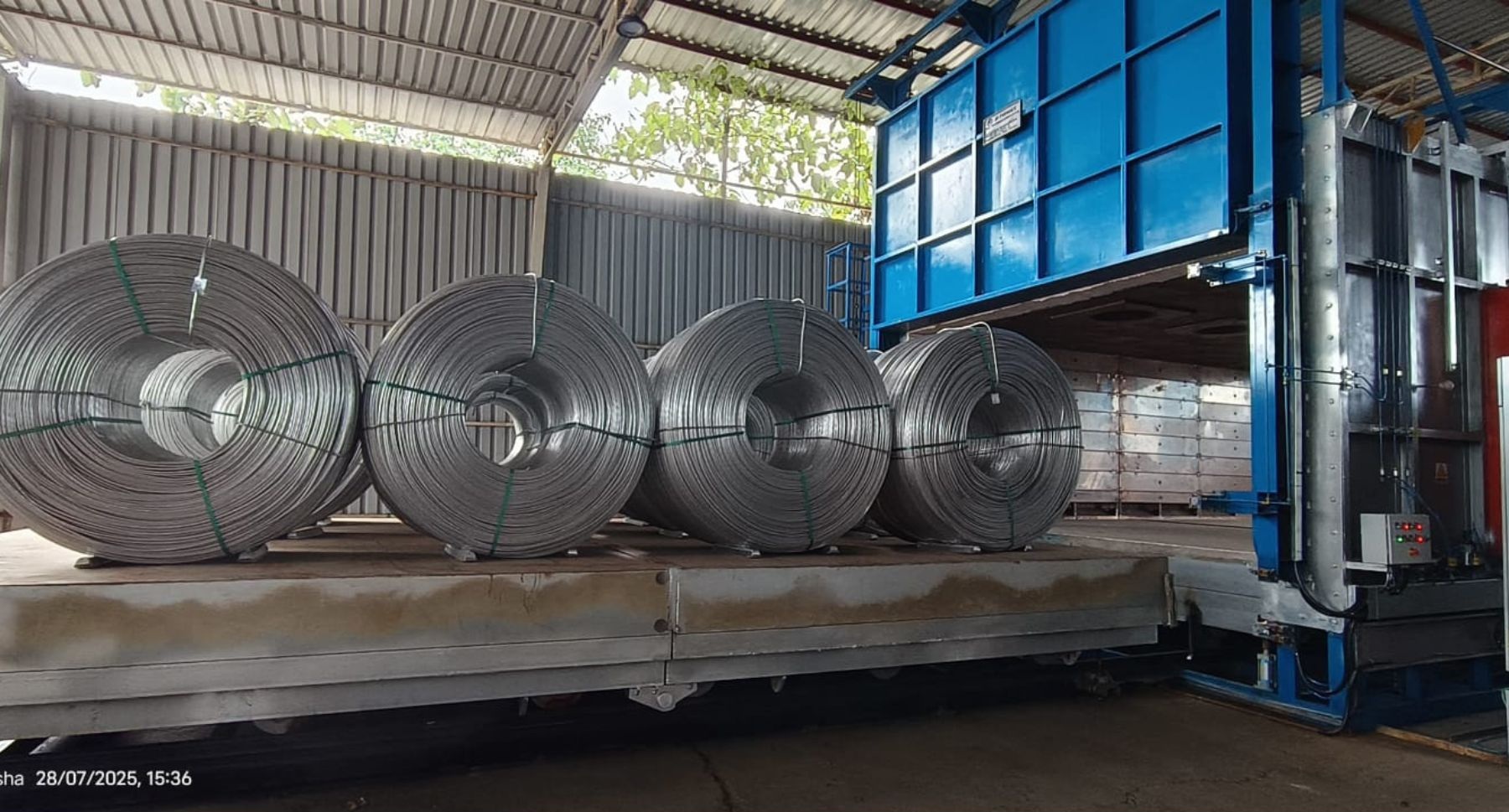
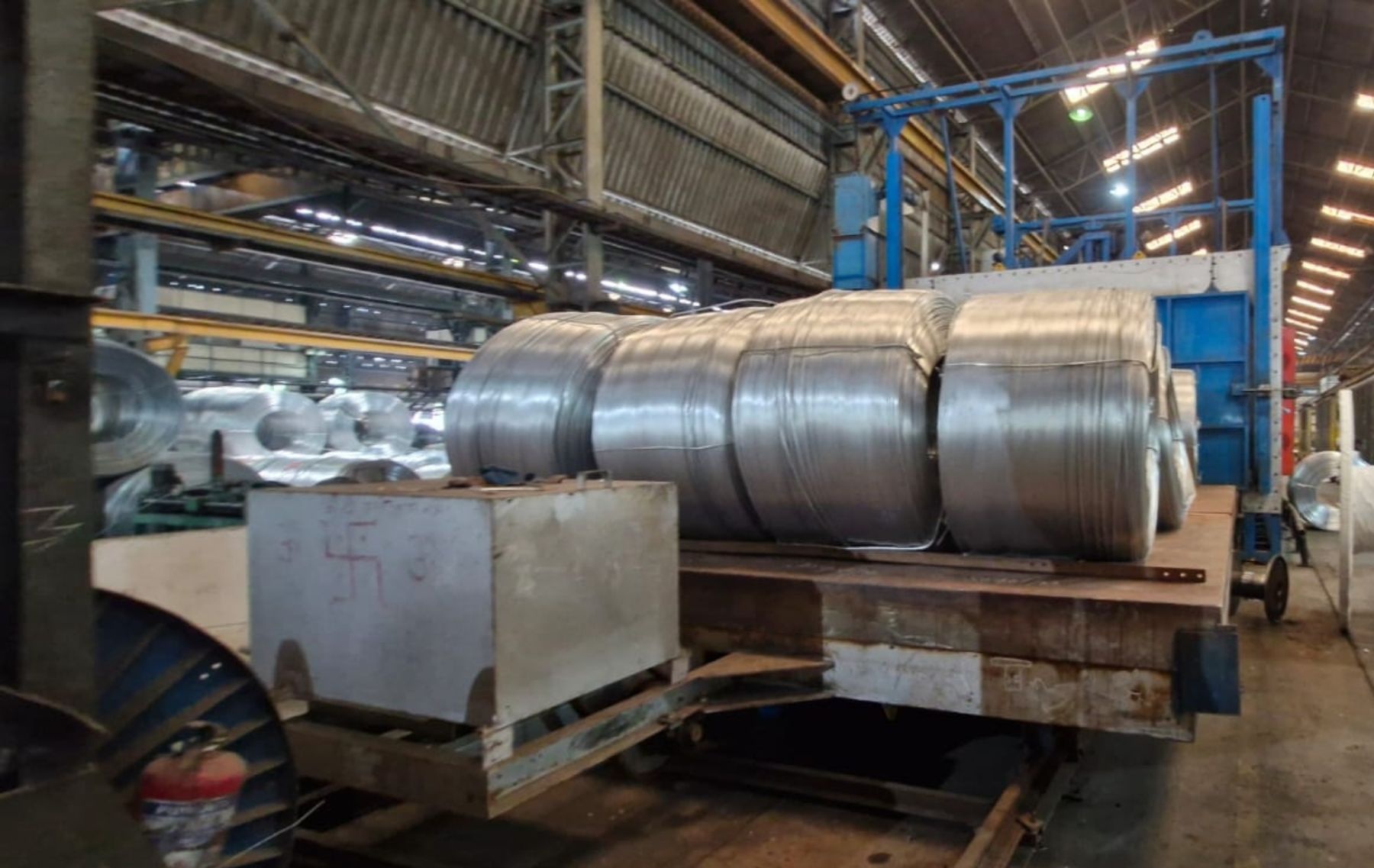
A bogie hearth design allows drums of wire or coiled conductors to be loaded directly onto a mobile hearth, wheeled into the furnace chamber, processed, and withdrawn — without manual handling inside the hot zone. This batch-type configuration scales from smaller production runs up to large capacities, with furnaces available up to 50 MT per batch and, in larger configurations, up to 200 MT. That scalability means the same furnace architecture can serve a growing manufacturing operation without a complete process redesign.
Engineering Details That Drive Performance
Several design elements work together to make these furnaces effective for aluminium conductor processing:
Hot air recirculation. Axial or centrifugal recirculation fans, paired with stainless steel baffles, ensure hot air is distributed evenly across the load. Two-speed motors or VF drives allow the system to balance circulation intensity against power consumption, which matters when furnaces run extended soaking cycles.
Zoned heating elements. For electrically heated furnaces, strip-type heating elements are arranged along the sidewalls and divided into multiple heating zones. Each zone’s heater cartridges are grouped in STAR/DELTA or parallel STAR/DELTA configurations, so a single heater bank can be isolated and serviced without shutting down the entire furnace — a detail that directly reduces unplanned downtime.
Thyristor-based control. Temperature control is typically managed through a heat-head ratio control philosophy using thyristor heater controllers. Furnaces can be configured with 100% thyristor control or a 30% thyristor / 70% STAR-OFF mode, giving manufacturers a way to balance control precision against energy costs during heating and soaking phases.
Insulation for thermal efficiency. Ceramic fibre board backed by ceramic fibre blankets, secured with stainless steel studs, lines the sidewalls, roof, and doors. This keeps skin temperatures low, improves worker safety around the furnace, and reduces heat loss — directly lowering energy consumption per batch.
Sealed doors and bogie. Pneumatically operated soft seal clamps on the vertical lift doors and bogie prevent cold air ingress, which would otherwise create temperature inconsistencies across the load and waste energy compensating for the leak.
Fuel flexibility. Where electric heating isn’t the preferred route, furnaces can be fired using high-efficiency burners supported by combustion fans, atomizing fans, oil heating and pumping systems, or gas trains. Light Diesel Oil, LPG, and Natural Gas can be used individually or combined in dual-fired configurations, along with auto ignition and flame failure safety systems.
Full Automation Through PLC & SCADA
Perhaps the most significant shift in modern ageing cum annealing furnaces is the move to full automation. Instrumentation built around PLC and SCADA systems, supported by programmable temperature controllers, temperature recorders, and HMI panels, means the entire thermal cycle — heating rate, soak time, cooling — is monitored and controlled digitally rather than through manual intervention.
This delivers a few concrete benefits for conductor manufacturers:
Repeatable batch quality. Automated cycles remove operator-to-operator variation, so every batch of conductor sees the same thermal profile.
Temperature uniformity within ±1°C, which is critical when conductor specifications demand tight mechanical and electrical property tolerances.
Traceable process data, useful for quality audits and for meeting standards such as NADCAP, TUS, CQI-9, and AMS 2750.
Reduced dependency on manual monitoring, freeing skilled personnel for higher-value tasks on the floor.
Built for Long-Term Industrial Use
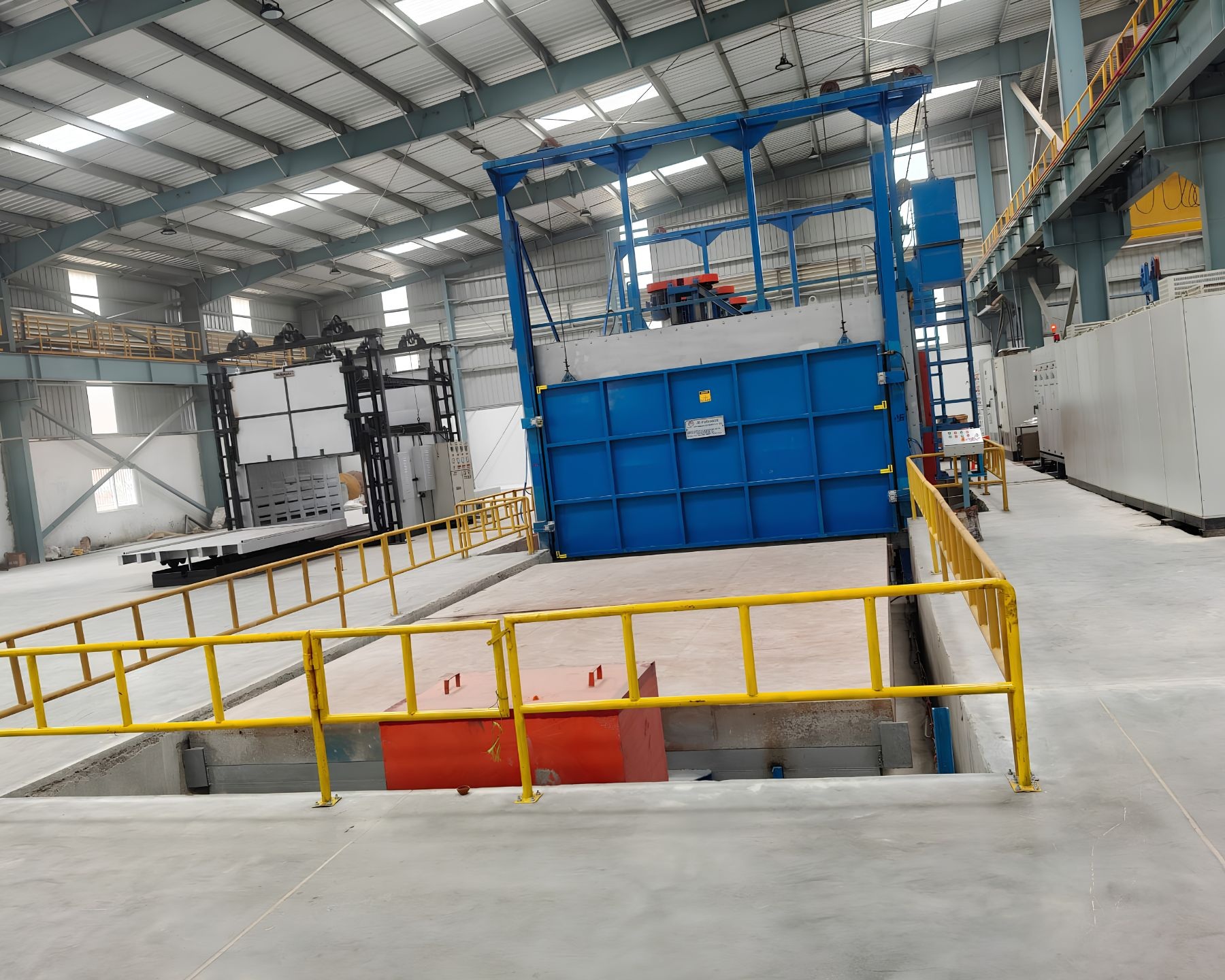
Beyond the thermal engineering, these furnaces are designed as long-service industrial assets. Robust heavy-duty construction, energy-efficient ceramic fibre insulation, double-seal pneumatic door clamping, and high-efficiency gearboxes with inbuilt braking systems all contribute to equipment that’s meant to run batch after batch for years with minimal degradation in performance.
For manufacturers processing overhead bare aluminium conductors — new-generation types included — an ageing cum annealing furnace isn’t just a heat treatment chamber. It’s a production-critical system where every design choice, from baffle placement to thyristor control mode, has a direct effect on conductor quality, energy cost, and uptime.
The Bottom Line
Combining annealing and ageing into a single, fully automated bogie hearth furnace lets aluminium conductor manufacturers process higher volumes with tighter quality control and lower energy overhead than separate, manually managed systems allow. As conductor specifications continue to tighten and energy costs remain a persistent concern, furnaces engineered around zoned heating, precise insulation, and PLC/SCADA automation are becoming less of an upgrade option and more of an operational necessity.