
Batch Furnace vs Continuous Furnace: Technical Comparison
Choosing the Right Furnace for Efficient Industrial Heat Treatment
In modern manufacturing, selecting the right industrial furnace directly affects product quality, production capacity, energy consumption, and operating cost.
Two commonly used systems are Batch Furnaces and Continuous Furnaces. While both are designed for controlled heating and heat treatment, their operating methods and applications are different.
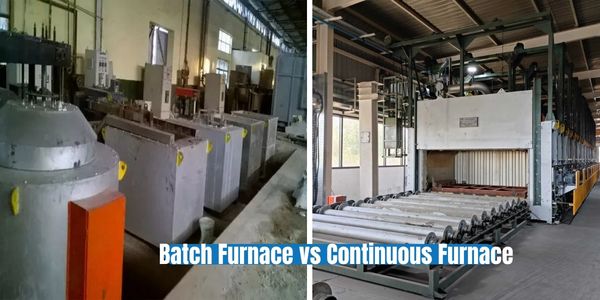
What Is a Batch Furnace?
A batch furnace processes a specific quantity of components at one time. The material is loaded into the furnace, heated according to a predetermined temperature cycle, held for the required duration, and then unloaded.
Batch furnaces are ideal when manufacturers need flexibility, precise temperature control, and the ability to process different product sizes or materials.
Typical Technical Specifications
| Parameter | Typical Range |
|---|---|
| Furnace Type | Bogie Hearth / Box / Pit / Chamber |
| Working Temperature | Up to 1,200°C or higher depending on design |
| Chamber Size | 1,000 × 1,000 × 1,000 mm to 6,000 × 4,000 × 3,000 mm and above |
| Load Capacity | 500 kg to 50,000 kg+ |
| Temperature Uniformity | Typically ±5°C to ±10°C |
| Heating | Electric / Gas / Diesel |
| Temperature Control | PID + PLC |
| Monitoring | HMI / SCADA |
| Insulation | Ceramic Fibre / Refractory / Mineral Wool |
| Heating Elements | Kanthal / Ni-Cr / MoSi₂, depending on temperature |
| Loading System | Bogie / Trolley / Manual / Crane |
| Atmosphere | Air / Controlled Atmosphere, as required |
What Is a Continuous Furnace?
A continuous furnace is designed for continuous production. Components enter the furnace through an in-feed system and move through different heating zones before exiting after completing the required thermal cycle.
These furnaces are particularly suitable for high-volume production environments where consistent throughput is important.
Typical Technical Specifications
| Parameter | Typical Range |
|---|---|
| Furnace Type | Conveyor / Mesh Belt / Roller Hearth / Pusher |
| Working Temperature | 300°C–1,200°C depending on application |
| Heating Zones | 2–10+ zones |
| Temperature Uniformity | Typically ±5°C to ±10°C |
| Heating | Electric / Gas |
| Temperature Control | Individual PID control per zone |
| Conveyor Speed | Application dependent |
| Controls | PLC + HMI / SCADA |
| Atmosphere | Air / Nitrogen / Endothermic / Other controlled atmosphere |
| Production | Continuous / High-volume |
| Cooling | Air / Water / Controlled Cooling |
Batch vs Continuous Furnace – Which Is Better?
| Feature | Batch Furnace | Continuous Furnace |
|---|---|---|
| Production | Batch-wise | Continuous |
| Flexibility | Excellent | Moderate |
| High-volume production | Moderate | Excellent |
| Product variation | Excellent | Limited |
| Temperature control | Highly flexible | Zone-based |
| Initial investment | Generally lower | Generally higher |
| Automation | Manual to fully automatic | Usually highly automated |
| Best suited for | Different components / smaller batches | Mass production |
Which Furnace Should You Choose?
Choose a Batch Furnace when:
- Product sizes vary frequently
- Different heat-treatment cycles are required
- Production quantity changes regularly
- Large or heavy components need processing
- Flexibility is important
Choose a Continuous Furnace when:
- Production volume is high
- Products are relatively consistent
- Continuous operation is required
- Automation is a priority
- Production throughput is critical
Why Choose the Right Furnace?
A properly selected furnace provides:
Better temperature uniformity → Consistent metallurgical properties → Reduced rejection → Improved productivity → Lower operating cost
At JR Furnace & Ovens, furnace systems can be engineered according to product dimensions, load capacity, operating temperature, heating method, production rate, temperature uniformity, and automation requirements.
- Common Industrial Furnace Problems and Their Solutions
Identify Furnace Problems Early – Improve Performance, Safety & Productivity
Industrial furnaces operate under high temperatures and demanding production conditions. Even a small issue with heating elements, insulation, sensors, or controls can affect temperature uniformity, cycle time, energy consumption, and product quality.
Regular monitoring and preventive maintenance can significantly reduce unexpected breakdowns.
- Uneven Temperature Distribution
Problem
Different areas of the furnace chamber may show different temperatures.
Possible Causes
- Damaged heating elements
- Poor air circulation
- Improper loading
- Insulation deterioration
- Incorrect thermocouple position
- Fan or circulation system problems
Solution
- Check heating elements
- Verify thermocouple calibration
- Maintain proper loading pattern
- Inspect insulation
- Check circulation fans
- Conduct temperature uniformity surveys when required
Typical target: Temperature uniformity can be designed around ±5°C to ±10°C, depending on the process requirement.
- Heating Takes Too Long
Problem
The furnace requires more time than normal to reach the set temperature.
Common Causes
- Heating element failure
- Low electrical supply
- Damaged insulation
- Excessive door opening
- Overloading
- Incorrect heating element configuration
Solution
Check the:
- Heating elements
- Electrical connections
- Thyristor/controller
- Insulation condition
- Furnace loading
- Power supply
- Excessive Energy Consumption
Higher-than-normal energy consumption can indicate a furnace efficiency problem.
Possible Causes
- Heat leakage
- Damaged door seals
- Poor insulation
- Frequent door opening
- Overloading
- Incorrect temperature settings
Solution
Use:
- High-quality ceramic fibre insulation
- Proper door sealing
- Automatic temperature control
- Programmable heating cycles
- Energy monitoring
- Optimized loading patterns
- Heating Element Failure
Heating elements are among the most important components of an electric furnace.
Common Causes
- Overheating
- Element ageing
- Incorrect electrical supply
- Mechanical damage
- Contamination
- Improper loading
Preventive Actions
Regularly inspect:
- Element condition
- Electrical connections
- Element resistance
- Terminal connections
- Furnace atmosphere
- Hot spots
Depending on the operating temperature, materials such as Kanthal, Ni-Cr, or MoSi₂ may be selected.
- Thermocouple or Temperature Sensor Problems
An inaccurate thermocouple can result in incorrect furnace temperature and poor product quality.
Symptoms
- Temperature fluctuations
- Incorrect temperature display
- Unexpected heating/cooling
- Alarm activation
- Product quality variation
Solution
- Inspect thermocouple condition
- Check wiring
- Verify sensor position
- Calibrate periodically
- Replace damaged sensors
Common thermocouple selection depends on the operating temperature and furnace design.
- PLC / HMI Control Problems
Modern industrial furnaces often use PLC + HMI/SCADA systems for automatic operation.
Problems may occur due to:
- Sensor failure
- Communication errors
- Loose connections
- Power interruptions
- Incorrect program settings
Solution
Maintain:
PLC → HMI → PID Controller → Thyristor → Heating System → Thermocouple
as an integrated control system.
- Door and Sealing Problems
Poor door sealing can cause significant heat loss.
Solution
Inspect:
- Door gasket
- Refractory lining
- Door frame
- Locking mechanism
- Sealing surfaces
A properly sealed furnace improves energy efficiency and temperature stability.
- Insulation Damage
Damaged insulation increases heat loss and can create external hot spots.
Solution
Inspect insulation periodically and replace damaged sections using suitable materials such as:
- Ceramic fibre
- Refractory bricks
- Castable refractory
- Mineral wool
The insulation design should be selected according to the operating temperature and furnace construction.
Quick Furnace Troubleshooting Guide
| Problem | Possible Cause | Recommended Action |
|---|---|---|
| Uneven temperature | Elements / circulation | Inspect heating & airflow |
| Slow heating | Element / insulation | Check power and insulation |
| High energy consumption | Heat leakage | Check insulation & seals |
| Element failure | Overheating / ageing | Inspect and replace |
| Temperature fluctuation | Thermocouple | Calibrate / replace |
| PLC alarm | Sensor / communication | Check control system |
| Door heat leakage | Damaged seal | Replace sealing |
| External hot spots | Insulation damage | Repair insulation |
The Best Solution Is Prevention
Most furnace problems can be minimized through planned inspection, proper operation, calibration, and preventive maintenance.
- Industrial Furnace Maintenance: Preventive Maintenance Checklist
A Simple Maintenance Guide for Longer Furnace Life & Reliable Production
Industrial furnaces are major production assets. Proper maintenance helps maintain temperature accuracy, energy efficiency, safety, productivity, and equipment life.
A preventive maintenance program should cover the mechanical, electrical, thermal, control, and safety systems.
Daily Furnace Maintenance Checklist
Before Operation
☐ Check furnace chamber condition
☐ Inspect doors and seals
☐ Check heating elements visually
☐ Check thermocouple condition
☐ Check control panel
☐ Check emergency stop
☐ Check cooling system, if applicable
☐ Check unusual sounds or vibrations
☐ Ensure proper loading arrangement
During Operation
☐ Monitor actual vs set temperature
☐ Check heating cycle
☐ Observe abnormal alarms
☐ Monitor current/power consumption
☐ Check door sealing
☐ Monitor circulation fan, if provided
Weekly Maintenance Checklist
Electrical System
☐ Inspect electrical terminals
☐ Check cables and connections
☐ Inspect contactors/thyristors
☐ Check control panel ventilation
☐ Check cooling fans
Heating System
☐ Inspect heating elements
☐ Check element connections
☐ Look for hot spots
☐ Check element resistance where applicable
Mechanical System
☐ Inspect bogie/trolley wheels
☐ Check door movement
☐ Check gearbox and drive system
☐ Inspect chains/rollers where applicable
☐ Lubricate moving components as recommended
Monthly Maintenance Checklist
Temperature Control
☐ Verify thermocouple condition
☐ Check temperature controller/PID
☐ Verify temperature recorder
☐ Check PLC/HMI operation
☐ Review temperature trends
Furnace Structure
☐ Inspect refractory lining
☐ Inspect ceramic fibre insulation
☐ Check cracks and damaged areas
☐ Inspect furnace shell
☐ Check door sealing condition
Safety System
☐ Test emergency stop
☐ Check alarms
☐ Verify safety interlocks
☐ Check over-temperature protection
☐ Verify circuit protection
Quarterly / Six-Month Maintenance
Depending on operating hours and application:
☐ Electrical panel preventive inspection
☐ Thermocouple calibration
☐ Temperature uniformity test
☐ Heating element inspection
☐ Insulation inspection
☐ Motor and gearbox inspection
☐ Fan/bearing inspection
☐ PLC backup
☐ HMI program backup
☐ Safety interlock testing
Annual Furnace Maintenance
A detailed annual inspection should include:
- Temperature Uniformity
Verify temperature distribution throughout the working chamber.
For example:
Required operating temperature: 850°C
Target uniformity: ±5°C
The actual requirement should always be based on the customer’s process and applicable standard.
- Thermocouple Calibration
Verify temperature sensors against a calibrated reference.
- Insulation Inspection
Check for:
- Cracks
- Compression
- Heat damage
- Fibre deterioration
- Refractory damage
- Heating Element Inspection
Check:
- Element condition
- Resistance
- Connections
- Terminal condition
- Uneven heating
- Control System Inspection
Check:
PLC + HMI + PID + Thyristor + Temperature Recorder + Sensors
for correct operation and communication.
Industrial Furnace Preventive Maintenance Schedule
| Component | Daily | Weekly | Monthly | Annual |
|---|---|---|---|---|
| Furnace Chamber | ✓ | ✓ | ✓ | ✓ |
| Heating Elements | ✓ | ✓ | ✓ | ✓ |
| Thermocouples | ✓ | ✓ | ✓ | ✓ |
| Door & Seals | ✓ | ✓ | ✓ | ✓ |
| Electrical Panel | ✓ | ✓ | ✓ | ✓ |
| PLC/HMI | ✓ | ✓ | ✓ | ✓ |
| Insulation | ✓ | ✓ | ✓ | |
| Bogie/Trolley | ✓ | ✓ | ✓ | ✓ |
| Gearbox/Motor | ✓ | ✓ | ✓ | |
| Safety Interlocks | ✓ | ✓ | ✓ | ✓ |
| Temperature Uniformity | ✓ |
Why Preventive Maintenance Matters
A well-maintained industrial furnace can provide:
✔ Consistent Temperature
✔ Better Product Quality
✔ Reduced Energy Consumption
✔ Fewer Unexpected Breakdowns
✔ Longer Equipment Life
✔ Improved Operator Safety
✔ Lower Maintenance Cost
Final Take away
Industrial furnace performance depends not only on the furnace design but also on how well the equipment is operated and maintained.
Regular preventive maintenance of the heating system, insulation, thermocouples, control panel, PLC/HMI, mechanical components, and safety systems helps ensure reliable long-term operation.
JR Furnace & Ovens designs and manufactures industrial heating and heat-treatment systems with application-specific solutions for temperature control, chamber size, load capacity, heating method, insulation, automation, and production requirements.